
Industrial Technology in Canada: Key Trends and Growth Outlook for 2025
Overview of Industrial Technology in Canada
Industrial technology in Canada is undergoing a major transformation in 2025 as businesses adopt advanced digital tools to improve productivity, efficiency, and sustainability. From smart manufacturing and automation to artificial intelligence (AI) and clean technology, industrial innovation is reshaping how Canadian industries operate and compete globally.
Government support, private-sector investment, and rising demand for resilient supply chains are accelerating the adoption of industrial technology across manufacturing, energy, mining, transportation, and infrastructure.
Advanced Manufacturing and Automation
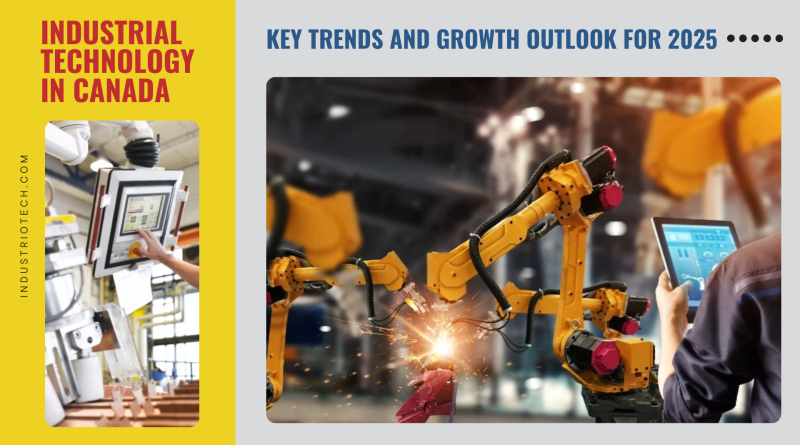
Manufacturing remains at the core of Canada’s industrial technology growth. In 2025, companies are increasingly using robotics, automation systems, and smart sensors to modernize production lines and address labor shortages.
Technologies such as predictive maintenance, digital twins, and real-time data analytics are helping manufacturers reduce downtime, improve quality control, and lower operating costs. Small and medium-sized enterprises are also adopting flexible automation to remain competitive in both domestic and export markets.
Artificial Intelligence and Industrial Data
AI is playing a growing role in Canada’s industrial sector. In 2025, industrial AI applications are widely used for process optimization, supply chain forecasting, equipment monitoring, and energy management.
Canadian firms are leveraging machine learning to analyze large volumes of industrial data, enabling faster decision-making and improved operational efficiency. AI adoption is also supporting safer work environments by identifying potential risks before failures occur.
Clean Technology and Sustainable Industry
Clean technology is a major driver of industrial innovation in Canada. As industries work toward emissions reduction and sustainability targets, investments in electrification, carbon capture, energy-efficient equipment, and renewable integration continue to grow.
Industrial technology is helping energy producers, mining companies, and manufacturers reduce environmental impact while maintaining productivity. Canada’s access to natural resources and clean energy positions it as a leader in sustainable industrial development.
Smart Infrastructure and Industrial Connectivity
The expansion of industrial Internet of Things (IIoT) networks and smart infrastructure is improving connectivity across industrial operations. In 2025, better data integration allows companies to monitor assets remotely, enhance logistics performance, and strengthen supply chain resilience.
Advances in connectivity also support infrastructure projects in transportation, utilities, and public works, improving long-term reliability and efficiency.
Workforce and Skills Development
As industrial technology evolves, workforce development remains a priority. Canadian industries are investing in digital skills training, upskilling programs, and collaboration with educational institutions to ensure workers can operate and manage advanced technologies.
A technology-enabled workforce is essential to sustaining innovation and maintaining Canada’s competitiveness in global industrial markets.
Conclusion
In 2025, industrial technology is a critical pillar of Canada’s economic growth and industrial competitiveness. Through automation, AI, clean technology, and smart infrastructure, Canadian industries are becoming more efficient, resilient, and sustainable. Continued investment, supportive public policy, and workforce development will be key to ensuring Canada remains a global leader in industrial innovation in the years ahead.


