
Autonomous Organizations
FOUNDING WHITE PAPERSecure AITransformation™ Governing Intelligence in the Era of Autonomous Organizations Dr. Nader IranpourFounder, Secure AI Transformation™ (SAIT)AI Governance & Digital Trust Architectwww.TerminuSys.comnader@terminusys.com 2026 | Secure AI Transformation™ #SecureAITransformation |
About the Author
Dr. Nader Iranpour is the Founder of Secure AI Transformation™ (SAIT), an emerging discipline dedicated to governing the secure adoption of artificial intelligence within modern organizations. His work integrates artificial intelligence, cybersecurity, enterprise architecture, governance, and digital transformation into a unified operating model designed for the AI era.
With extensive experience in information security management, governance frameworks, and organizational transformation, Dr. Iranpour develops strategic models, executive programs, and institutional frameworks that help enterprises and governments transition toward trusted intelligent organizations.
Through Secure AI Transformation, he advances a global vision where innovation, trust, security, and governance evolve together — enabling organizations to safely harness intelligent systems while maintaining resilience, accountability, and digital confidence.
Founder | Secure AI Transformation (SAIT) | AI Governance & Digital Trust Architect
Abstract
Artificial Intelligence represents the most significant organizational inflection point since the Industrial Revolution — not because it automates work, but because it delegates decision-making itself to machines. For the first time in human history, organizations are beginning to think, reason, and act through non-human intelligence.
Yet the frameworks governing this transformation have not kept pace. Cybersecurity protects systems. Digital transformation digitizes processes. Neither governs intelligence.
This paper introduces Secure AI Transformation™ (SAIT) — a new interdisciplinary discipline integrating Artificial Intelligence, Cybersecurity, Governance, Risk Management, Ethics, and Digital Transformation into a unified operating model for the AI era. SAIT answers the defining leadership question of our time:
How do organizations become AI-driven without becoming AI-vulnerable?
SAIT is proposed not merely as a methodology, but as the management science of intelligent civilization — the missing discipline enabling trustworthy, accountable, and ethically aligned AI adoption at organizational and societal scale.
1. The Civilizational Moment
Human civilization has advanced through successive epochs, each defined by its dominant capability and organizational model:
| Era | Defining Capability | Organizational Model |
| Agricultural Age | Land | Kingdoms & Hierarchies |
| Industrial Age | Machines | Corporations |
| Information Age | Computers | Digital Enterprises |
| AI Age | Intelligence | Autonomous Organizations |
We now enter the first era in which decision-making itself becomes technological. Every prior organizational model assumed human cognition at its core. Artificial Intelligence disrupts that assumption — and with it, the entire architecture of organizational accountability.
This is not merely a technology shift. It is a governance crisis in the making — and an opportunity for those who act with clarity and courage.
| The Core ChallengeOrganizations worldwide are racing to adopt AI. Algorithms now recommend medical treatments, approve financial transactions, detect security threats, and guide strategic decisions. Yet most organizations ask the wrong question: How do we use AI? The real question is: How do we govern intelligence once it operates inside our organizations? |
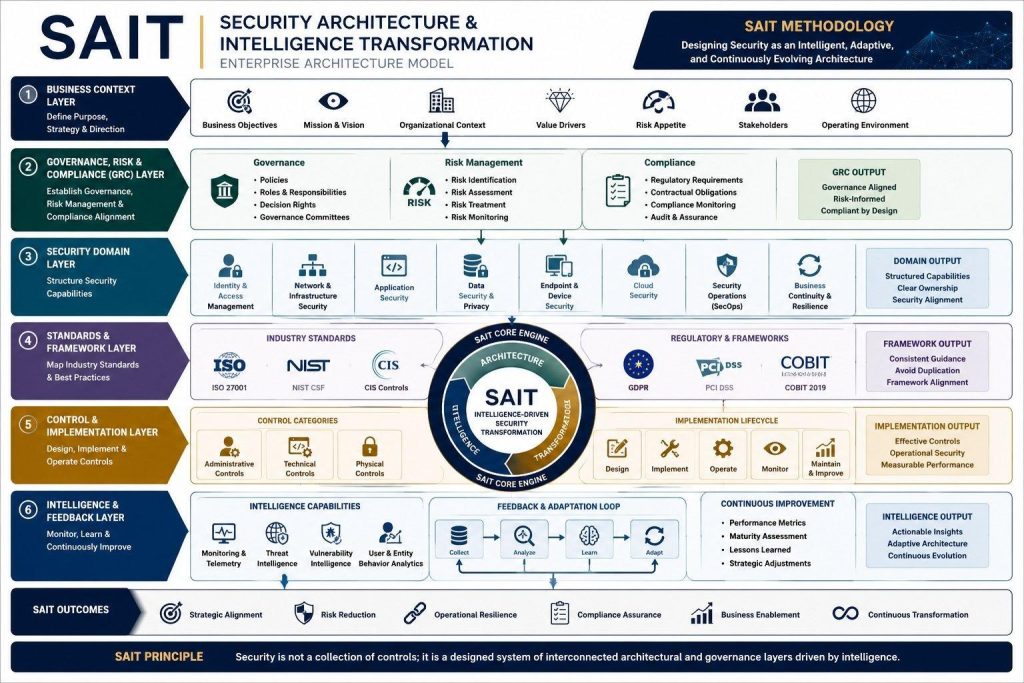
Figure 1 — SAIT Security Architecture & Intelligence Transformation: Enterprise Architecture Model
2. The Governance Gap
History offers a consistent lesson: humanity rarely struggles to invent powerful technology. Our enduring challenge is learning to govern it responsibly.
The Industrial Revolution gave us machines before safety standards. The internet connected the world before we understood cyber risk. Today, AI advances faster than our ability to govern it — and the consequences are categorically different from prior technological risks.
Why existing frameworks are insufficient:
- Cybersecurity protects systems and data — not decisions or algorithmic outcomes.
- Digital Transformation optimizes processes — it does not address autonomous decision authority.
- AI Ethics provides moral principles — without operational governance structures.
- Risk Management frameworks predate autonomous, continuously learning systems.
No existing discipline addresses the convergence of these challenges at enterprise scale. The result: a governance gap in which organizations deploy AI capabilities without the frameworks to govern them responsibly.
| Intelligence without governance becomes risk. Innovation without trust becomes instability. |
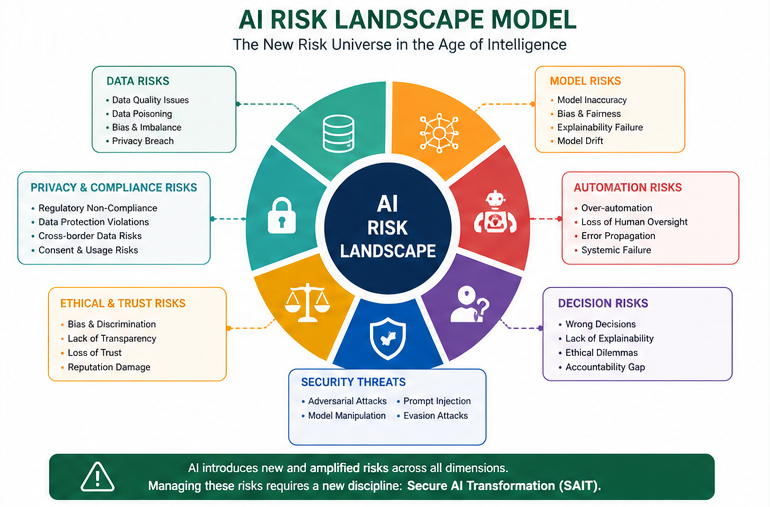
Figure 2 — The AI Risk Landscape Model: The New Risk Universe in the Age of Intelligence
3. Introducing Secure AI Transformation™
Secure AI Transformation (SAIT) is defined as:
| Official DefinitionSecure AI Transformation™ is the discipline that governs how organizations adopt Artificial Intelligence safely, responsibly, and strategically — while preserving digital trust, operational resilience, and human accountability. |
SAIT integrates five historically separate fields into a unified operating model:
- Artificial Intelligence — capability, strategy, and value creation
- Cybersecurity — protection, resilience, and model integrity
- Enterprise Governance — accountability, oversight, and control
- Risk Management — identification, treatment, and continuous monitoring
- Digital Transformation — execution, change management, and operating model design
This integration is SAIT’s defining intellectual contribution. The discipline operates at the intersection where no existing field works — governing not systems, not processes, but intelligence itself.
The Grand Thesis
Digital Transformation digitized work. AI Transformation delegates decision-making. Secure AI Transformation governs intelligence itself.
Just as law enabled societal order, accounting enabled economic scale, and management enabled corporations — Secure AI Transformation emerges as the management science of intelligent civilization.
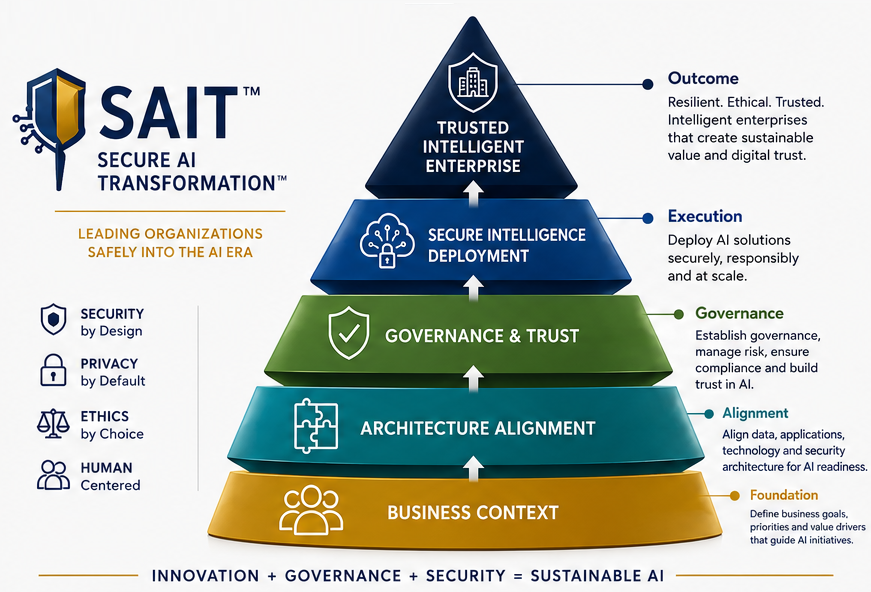
Figure 3 — The SAIT Discipline Master Model: Integrating AI, Cybersecurity, Governance & Digital Transformation
4. The SAIT Reference Model™
The SAIT Reference Model provides a structured five-layer operating architecture for organizations navigating AI transformation. Each layer is dependent on the one beneath it — governance cannot be effective without architectural foundations, and architecture cannot be sound without clear business context.
| # | Layer | Focus & Outputs |
| 01 | Business Context | AI strategy, value priorities, risk appetite — the WHY of transformation |
| 02 | Architecture Alignment | Enterprise, data, security and AI architecture design — the DESIGN layer |
| 03 | Governance & Trust | AI policies, accountability models, ethics, compliance — the CONTROL layer |
| 04 | Secure AI Deployment | Protected ML systems, agentic AI, automation with security controls — the BUILD layer |
| 05 | Trusted Intelligent Enterprise | Autonomous operations, human-AI collaboration, continuous adaptation — the OUTCOME |
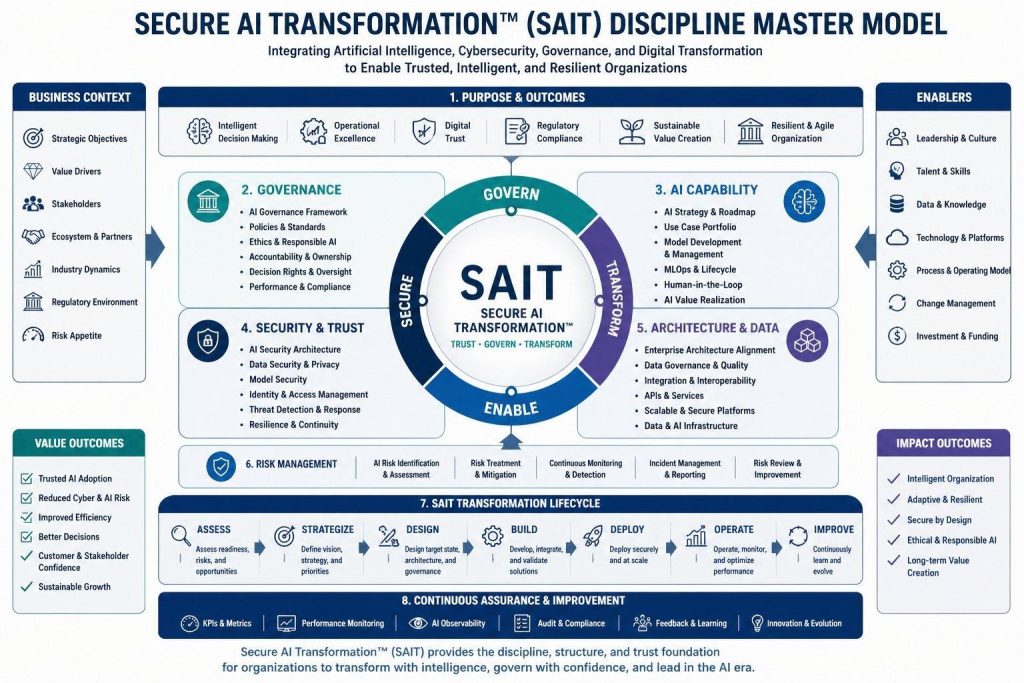
Figure 4 — SAIT Reference Model Pyramid: From Business Context to Trusted Intelligent Enterprise
| Trust becomes the operating system of AI-driven organizations. |
5. The Five Transformation Forces
SAIT operates across five forces that collectively define its scope — and differentiate it from every adjacent discipline. Pure AI experts, pure cybersecurity professionals, and pure transformation consultants each master one or two forces. SAIT practitioners govern all five simultaneously and interdependently.
| Technology | Selecting, deploying, and managing AI systems responsibly across the enterprise lifecycle. |
| Security | Protecting models, training data, inference pipelines, and AI-generated decisions from adversarial threats. |
| Governance | Establishing accountability structures, oversight mechanisms, and decision authority boundaries. |
| People | Transforming leadership roles, workforce capabilities, and organizational culture for the AI era. |
| Trust | Engineering digital trust as infrastructure — ensuring AI outcomes remain explainable, auditable, and aligned with human values. |
6. The Six Founding Principles
SAIT is grounded in six principles that constitute its ethical and operational foundation:
1. Trust Precedes Automation
No AI system should be deployed without established trust mechanisms — explainability, auditability, and human oversight designed in from the start.
2. Governance Precedes Scale
AI capabilities must be governed before they are expanded. Ungoverned intelligence scales risk, not just capability.
3. Human Accountability Remains Essential
Automation may execute decisions, but human accountability for those decisions is non-negotiable. Algorithmic outcomes require human stewards.
4. Security Enables Innovation
Security is not the opponent of AI progress — it is its foundation. Unsecured intelligence is fragile intelligence.
5. Technology Must Amplify Human Values
AI systems must be designed to extend human agency, dignity, and judgment — not to replace or diminish them.
6. Intelligence Without Responsibility Is Unacceptable
The deployment of autonomous decision-making systems carries an absolute obligation of responsible governance.
7. The SAIT Transformation Lifecycle
Every organization’s journey to becoming a Trusted Intelligent Enterprise follows a structured lifecycle. SAIT defines seven phases, progressing from initial awareness through full intelligent enterprise maturity — with continuous improvement embedded throughout.
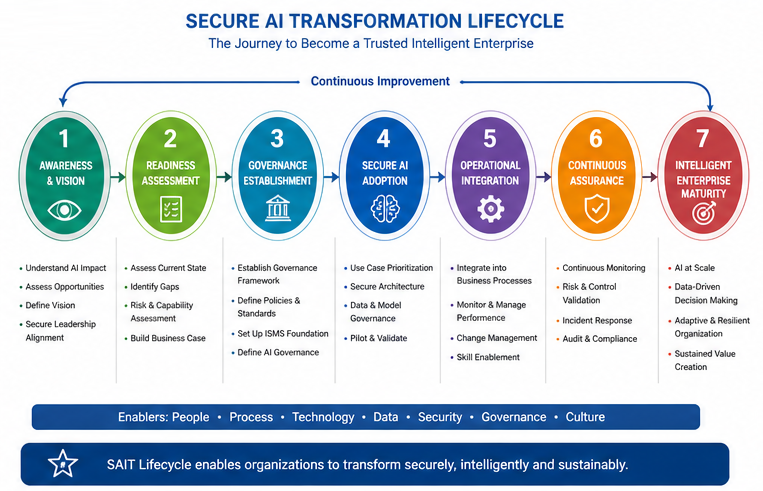
Figure 5 — SAIT Transformation Lifecycle: The Journey to a Trusted Intelligent Enterprise
The lifecycle is underpinned by seven enablers that must operate in concert: People, Process, Technology, Data, Security, Governance, and Culture. Organizations that treat these as separate workstreams — rather than an integrated system — consistently fail to achieve sustainable AI transformation.
8. Multi-Layer Governance for Intelligent Systems
Effective AI governance does not begin at the operational level — it flows from civilization-scale regulatory principles downward through strategic, enterprise, and operational layers. SAIT’s Governance Layers Model provides a structured architecture for this top-down direction and bottom-up assurance:
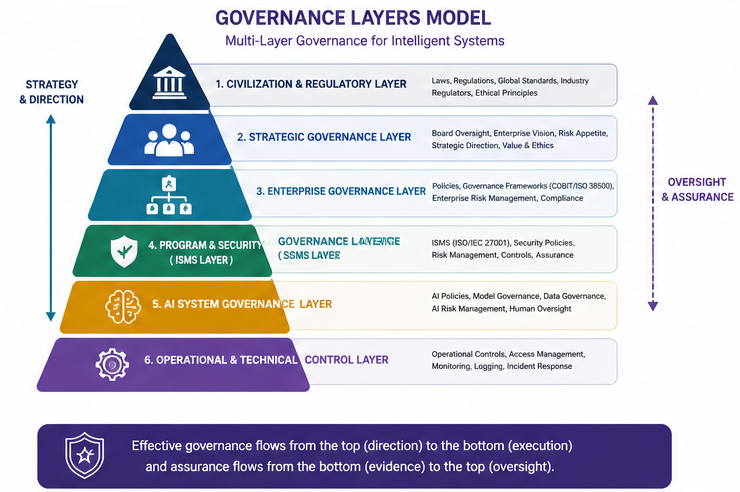
Figure 6 — SAIT Governance Layers Model: Multi-Layer Governance for Intelligent Systems
A critical insight of this model: governance direction flows top-down (from civilization-level laws and ethics to operational controls), while assurance flows bottom-up (from operational evidence to board-level oversight). Organizations that invert this relationship — attempting to build governance from the bottom up without strategic direction — produce compliance theater, not genuine accountability.
| Key Governance PrincipleEffective governance flows from the top (direction) to the bottom (execution). Assurance flows from the bottom (evidence) to the top (oversight). SAIT governance architecture ensures both directions function simultaneously. |
9. The SAIT Discipline Ecosystem
The full SAIT discipline integrates six interconnected domains, each playing a distinct role in enabling organizations to transform securely and intelligently:
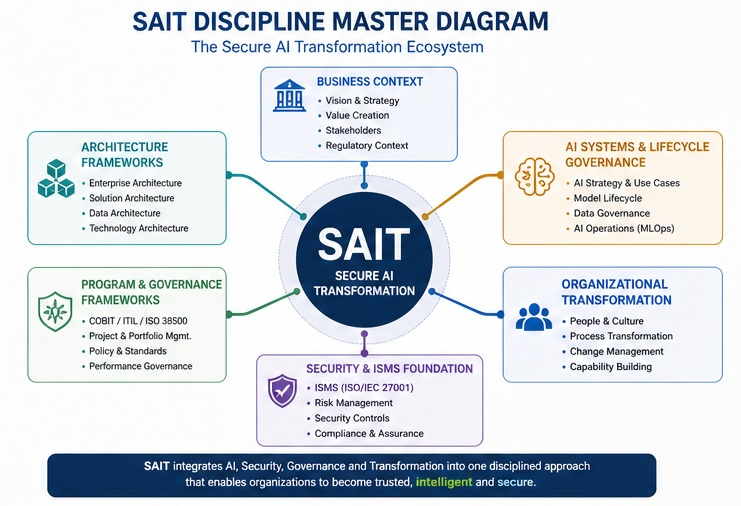
Figure 7 — SAIT Discipline Master Diagram: The Secure AI Transformation Ecosystem
A lasting discipline requires more than a framework document. SAIT is being established across six structural pillars:
Canonical Framework (SAITF™)
A published reference model with defined principles, domains, processes, roles, maturity levels, and assessment methodologies — the document every practitioner cites.
Body of Knowledge (SAIT-BoK™)
A structured knowledge base covering AI Governance, Secure Architecture, Risk Engineering, Digital Trust, and Transformation Leadership — comparable to PMBOK or ITIL.
Certification Ecosystem
A four-level ladder (Foundation → Practitioner → Leader → Fellow) enabling professionals to build and demonstrate SAIT competency.
Secure AI Transformation Institute™
An institutional body responsible for maintaining the framework, managing certification standards, publishing research, and governing terminology evolution.
Academic Integration
University curriculum packages and research collaboration enabling the next generation to learn SAIT before entering industry.
Standardization Pathway
A long-term strategy for contributing SAIT principles to global standards bodies, including ISO alignment and regulatory engagement.
10. Civilization-Scale Impact
SAIT is not confined to enterprise IT departments. Its implications span every domain of organized human activity:
| Economy | Government | Healthcare | Education & Society |
| AI productivity without systemic instability | Responsible automated public services | Trustworthy diagnostic and clinical intelligence | Adaptive learning ecosystems and preservation of human agency |
Every civilization is ultimately remembered for how it managed its defining capability. Rome built law. The Enlightenment built science. The Industrial Age built engineering. The Information Age built computing networks.
The AI Age will be remembered for how humanity learned to govern intelligence. Secure AI Transformation is positioned to become part of that answer.
11. An Invitation to Lead
Secure AI Transformation is not the property of any single organization, nation, or individual. It is a shared professional language — an open invitation to those who understand that the AI age demands a new kind of leadership.
This invitation is extended to:
- Executives willing to govern intelligence, not merely deploy it
- Technologists willing to build AI systems that earn trust
- Security professionals willing to expand their mandate from systems to decisions
- Policymakers willing to shape the regulatory foundations of the AI economy
- Educators willing to prepare the next generation for intelligent organizations
- Institutions willing to evolve their governance models for the AI era
The organizations that will lead the AI era are not those that adopt AI fastest. They are those that adopt AI most responsibly.
| Every organization will adopt AI. The successful ones will adopt it securely. |
The age of Secure AI Transformation has begun.
Key Terminology
The following terms constitute the founding vocabulary of the SAIT discipline:
AI-Native Organization: An enterprise designed from its foundations around intelligent decision systems, in which AI is embedded in operations, strategy, and governance.
Digital Trust Engineering: The discipline of designing AI systems and processes whose outcomes remain trustworthy, auditable, and explainable under conditions of automation.
Algorithmic Governance: The structured oversight mechanisms that define, monitor, and control the decision authority exercised by AI systems.
Secure Intelligence Lifecycle: The governance framework covering AI from data ingestion through model development, deployment, decision generation, and impact assessment.
AI Risk Surface: The expanded attack, failure, and accountability space introduced into an organization by the adoption of AI systems.
Human Authority Boundary: The defined threshold at which human judgment retains final decision rights, regardless of AI recommendation or capability.
References
National Institute of Standards and Technology. Artificial Intelligence Risk Management Framework (AI RMF 1.0). NIST, 2023.
ISO/IEC 23894:2023. Information Technology — Artificial Intelligence — Guidance on Risk Management. International Organization for Standardization.
European Commission. Artificial Intelligence Act (Regulation 2024/1689). Official Journal of the European Union, 2024.
World Economic Forum. Global Technology Governance Report. WEF, 2024.
ISACA. COBIT 2019 Framework: Governance and Management Objectives. ISACA, 2019.
OECD. Recommendation of the Council on Artificial Intelligence (OECD/LEGAL/0449). OECD, 2019.
UNESCO. Recommendation on the Ethics of Artificial Intelligence. UNESCO, 2021.
Secure AI Transformation™
Governing Intelligence. Preserving Trust. Enabling the Future.
Dr. Nader Iranpour | Founder, Secure AI Transformation Institute™
© 2026 Secure AI Transformation Institute™ | #SecureAITransformation